What your nonprofit should never hand to AI
We push nonprofits to use AI almost everywhere. A few things stay human every time, because the effort is the message. Here's where we draw the line.


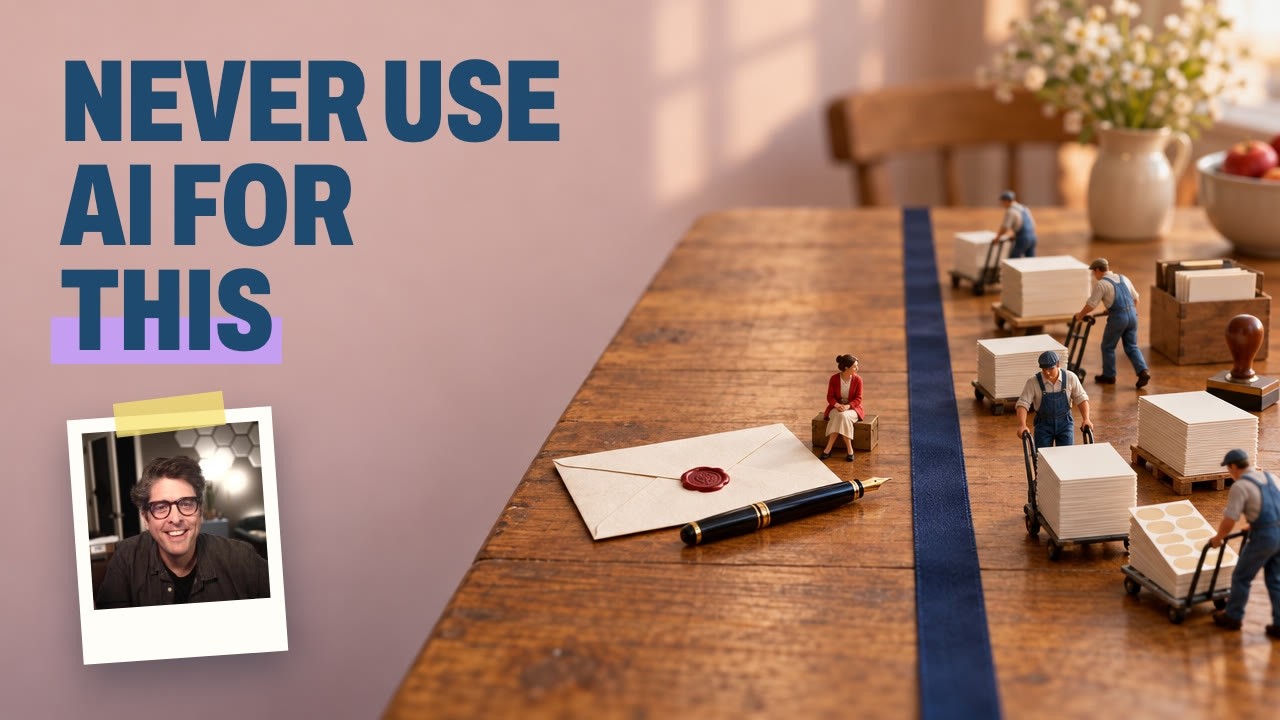
What should a nonprofit never use AI for?
Never hand AI the things that matter because a person did them. That means personal notes, the relationship with a donor, decisions about people's jobs, and the judgment calls only your team can make. Also keep sensitive data away from free tools. Everything else is fair game, and we push hard for it.
Colleen sums up how we think about it:
Colleen Cook · Recorded conversation, Oct 13, 2026people who believe in human first where it matters and AI first where it helps.
That second half matters as much as the first. If Possible exists to help nonprofits use AI almost everywhere. The line exists so you can say yes to the rest with confidence.
Why should personal touches stay personal?
Because the effort is the message. A birthday card or a note after a hard week tells someone you thought about them, and that only works if you did. AI can help you get there. It shouldn't write the thing for you.
I said it this way in September:
Scott Williams · Recorded conversation, Sep 30, 2026personal touches should be personal. So some things are AI, some things aren't. So don't make personal touches AI. But can you use AI to fuel your own human creative personal touch? For sure.
Fueling it looks like this. If you're not a natural writer, ask AI for three ways to open a condolence note, then write your own. Ask it to remind you what a donor told you last spring. Colleen's version is to let AI spark your creativity and keep the creating for yourself.
And for your family, keep AI out of it entirely:
Scott Williams · Recorded conversation, Oct 13, 2026I think that anything that's human still needs to be human. Write a letter for your mom. Don't have AI write it.
Should AI write your donor thank-you notes?
Let AI run the system, and write the note yourself. AI is great at knowing who needs a thank-you, when it should go out, and what the card should look like. The words inside should come from a person who means them. Colleen's shorthand is to let AI design the thank-you card and handwrite the thank-you card.
She was direct about it with a room full of fundraisers:
This is not the place to apply AI. You can use AI to send some thank yous and communication, but take the time.
Colleen opens every personal thank-you note she gets in the mail, and she's not alone. That's why the time AI saves elsewhere should flow here. Our donor thank-you system shows how to let AI handle the calendar, the list and the design so a person has time to write.
The same goes for follow-up after a donor visit. I love the idea of an AI assistant that reads your notes from a coffee meeting and reminds you to ask how their kid's robotics tournament went. It drafts. You decide, you edit, and you send. Nothing goes out without your review.
Should a nonprofit use an AI chatbot to talk to donors?
We don't recommend it. Donors give because of relationships with people who know them, and a chatbot standing in for your team breaks that. Use AI behind the scenes to prepare you, and keep the conversation itself human.
Colleen said it plainly at our October Intensive. We're not advocating for an AI chatbot to talk to your donors. Her reasoning is that the best fundraisers are the people who really get to know somebody, so the ask becomes a simple conversation when the moment comes.
Colleen has a useful test for what AI can send under your name. Letting AI send something on your behalf is impersonal, so it fits impersonal topics. A clearly labeled project update from AI is fine. A happy-birthday message from AI is not. She joked about what she'd do to anyone who sent her one.
Should you use AI to cut staff?
No. We tell every If Possible customer the same thing. Use AI to take the work that buries your people, then point those people at relationships, programs and the work only they can do. The time AI gives back is the whole point.
But now it's about doing the next step, which is cultivating relationships. This is the human thing.
At that same Intensive, Colleen listed what we don't advocate, and cutting people from your team was on it. Colleen's encouragement is to use freed-up space to be really intentional about the places where personal interaction matters. If you need help deciding where that time goes, start with how to reclaim five hours a week.
Can AI make judgment calls for your nonprofit?
AI can inform a judgment call. A person should make it. AI holds an enormous amount of knowledge and very little wisdom. When it doesn't know something about your organization, it guesses, and it can't weigh your values, your community or what a donor needs this week.
So anything substantive comes from a human. AI can draft the strategy, the board memo or the hard email. A person decides what it says and whether it ships. That's the idea behind keeping a human in the director's chair.
What data should never go into AI?
Anything sensitive on a free tool, and anything you wouldn't put in your CRM. Free AI plans can use what you type to train their models. On a paid plan with training turned off, your data sits in a similar place to your donor database. Then add guardrails before AI can act for you.
Colleen learned this one firsthand. Early on, a sensitive piece of information passed through her Claude Cowork and landed in a public channel in our Slack. Nobody saw it, and it was a real wake-up call. That's why a good AI setup interviews you about guardrails before it starts working, so it isn't making those decisions on your behalf. Write yours into your first AI policy.
Where we draw the line
| Keep it human | Hand it to AI gladly |
|---|---|
| The words in a thank-you note | Who needs a note, when, and the card design |
| Birthday, sympathy and personal messages | Reminders so you never miss one |
| Talking with donors | Prep before the visit; a draft follow-up for you to edit |
| Decisions about people and jobs | The busywork that buries your staff |
| Strategy calls and what ships | Drafts, options and research for the person deciding |
| Sensitive data on free tools | Your information on a paid plan with training off |
If you're bringing this line to your board, the board conversation about AI is a good place to start. You'll find more on where AI fits in our strategy articles.
If you want more of how we think about this as it evolves, join the newsletter. And if you'd like to draw your own line with Colleen and me and a group of nonprofit teams, get on the cohort waitlist.
Frequently asked questions
What should a nonprofit never use AI for?
Personal touches like thank-you notes, birthday cards and sympathy messages; conversations with donors; decisions about cutting staff; and final judgment calls on strategy. Also keep sensitive data off free AI tools. Use AI for nearly everything else, especially the work that keeps your team from people.
Is it okay to use AI to write donor thank-you letters?
Use AI for the system around thank-yous: the list, the timing, the card design and the reminder. Write or handwrite the message yourself. Donors can feel the difference, and a personal note is one of the few things people still open and keep.
Should nonprofits use AI chatbots on their website or for donors?
We don't recommend putting a chatbot between donors and your team. Relationships drive giving, and the best fundraisers are people who really know their donors. Use AI behind the scenes to prepare you for conversations and to draft follow-ups that a person reviews and sends.
Will AI replace jobs at our nonprofit?
It shouldn't, and we don't advocate cutting staff because of AI. The goal is to take production work off your team so they can spend more time on relationships, programs and the work only people can do. Decide in advance where the time AI saves will go.
Know an executive director who needs this?


