Episode 0525:57Season 1
Call Your Shot
Why your nonprofit feels like the best kept secret in town
Most nonprofits feel like the best kept secret in town because they only speak up when they have an ask. One appeal letter is never enough. Year-end takes hundreds of touches.
What you’ll walk away with
- Why one appeal letter is never enough: year-end takes hundreds of touches
- Why most nonprofits feel like the best kept secret in town: they only speak up when they have an ask
- How a giving day gets its energy, and why your donors want to be the guide, not the hero
- How one recorded conversation becomes a whole multi-channel campaign
- Colleen calls her shot: one person, one day, a whole Giving Tuesday campaign built with AI from the start
Chapters
Transcript
Tap any line to hear it from there.
Colleen
The thing we hear more than anything else is that these organizations feel like they're the best kept secret. And a big reason for that is they're only really putting energy into marketing and communications when they have an ask.
Scott
I mean, this is gonna sound crazy, but at least double digit touches. And when I say at least double digit, I'm saying shoot for three digits, like hundreds of touches.
Scott (AI voice)
Possible. I'm Scott Williams, here with Colleen Cook. Today, year-end, and why one letter is never enough. And at the end, she calls her shot.
Scott
Nonprofit call us about a year and a half ago, maybe two years, I'm not entirely sure. When they called, they called about this time and it's September or so, and they called saying, we really need an incredibly impactful year-end. And we said, let's talk, let's jam. And so we sat down, we had a big strategy session and while it was compelling and exciting, she also was coming off a tough year and it just became very clear that the amount of work that they needed to do in order to get the impact that they needed for that year-end, they just didn't line up. They didn't have the manpower, didn't have the assets, just had a lot of challenges.
They ended up launching something and it helped. That's probably a story that we all know. Too little came in too late and that kind of stuff. And it was a bummer. We wish we could have helped more.
Anyways, here's the thing, is that that was a year and a half ago, two years ago. And Colleen, we're living in a new world now. And it is wild what if that person were to have called or walked in the door this year, right now, like today, if they walked in, what would you say to that person now? I think that's what we need to talk about is because I mean, we're talking about this is year-end. This is the time where a lot of nonprofits are like, we gotta step it up.
We gotta make the ask, we gotta get out there. The amount to do in order to do it right is feels untenable, feels unable to be done. And so what is it that makes a great year-end campaign and why is 2026 the first year that this is a really fun activity now?
Colleen
I think the thing that organizations are realizing is that one appeal letter is not gonna be enough to close out their year-end. It feels like everybody's fighting this attention economy that we live in where it's just so much noise that you're trying to cut through that noise and get somebody to not just pay attention to you, but also take action on that. And it used to be like seven touches was enough to get a gift. Here's what's interesting to me is the direct mail piece that everybody does and that everybody should do typically is raising quite a bit more directly than anything else, right? And so we're attributing our giving to that letter that we get in the mail.
I mean, to the point that it's like on average, $4.51 per dollar spent return. And that really matters. However, if you let that define your strategy this year and you say, well, great, why are we making such a big deal of this? Let's just send a letter. You've completely missed the mark because multi-channel campaigns raise three times as much, which makes total sense.
If you think about how like you interact with your own direct mail, like when you open a letter that comes in your mailbox, it sits on the counter, right? It goes on the bulletin board. It becomes another task to do. And then you go on with your day and your life and you've got to remember to come back to it. And I think the thing that we tell our clients that we've seen tremendous success with our year-end appeals, with our giving days, with any sort of like mini campaign that is meant to activate your donor base and acquire new donors is that people need a lot of touch points.
They need a lot of reminders pointing back to that conversion place. And so whether that is digital conversion or whether that is physical conversion, your organization doesn't matter, but that multi-channel effort is non-optional.
Song: one letter is not enough
Colleen (AI voice)
Does it really take? Scott has a story about his own church.
Scott
Church, we may see something that says, hey, we're doing this men's Bible study. And to me, I'm like, let's just look at the facts. The facts are I go to this church, I'm a member of this church. I used to sit on the board of this church. The pastor is a friend.
I have many, many people I would call friends. This is a place that like I'm known. It's like Cheers or everybody knows your name. Like it's that kind of thing. Like it's deeply connected, but I don't actually feel invited to the men's small group until somebody says, hey, maybe you should think about going to the men's small group.
Love for you to come to the men's small group. But even then I'm like, I don't know if I wanna go. And then maybe a third person asks me or another touch point, another touch point. And I'm like three, four deep. And this is with my third place.
Forget about the fact that like your nonprofit is not the third place for most people. And so therefore like you need to be continually reminding them of the fact that you are on the fringe of the things that they care about. And you're trying to just slowly inch a little bit closer, but you need to have at least, I mean, this is gonna sound crazy, but at least double digit touches. And when I say at least double digit, I'm saying shoot for three digits. Like hundreds of touches.
And I mean, we're talking about constantly over time telling relevant stories in multi-channel only because you need to understand that even very deep, like imagine your spouse says, will you do this thing for me? There's something inside of you that's like, I don't know yet, sometimes. Do you know what I mean? Like, I don't know if that's something I want to do. I'm just saying like, we all have feelings about things and the things that are farther out from us, we have to hear those messages more to become more familiar with it and feel more possibility in taking the next step with that thing.
And so this is the multi-touch, multi-channel, you have to do it. You're living in kind of fantasy world. If you think all I have to do is just say that one thing that one time and everything's all good. Quick little fun story. We always have this thing, Berenstain Bears.
It's a great book series, but you notice that there's only lessons taught and learned and adapted and implemented and never ever once. It's not real world.
Colleen
Yeah, yeah, 100%, best kids ever. Yeah, exactly,
Scott
Best kids ever. Point is, is that like, that's not how the real world is. You have to hit it multiple times. Be loud, be consistent, be clear, but do it in a way that's good. You have to be good at it.
And so, oh my gosh, that's a major, major burden. And so therefore it really means you got to call an agency. You got to call an agency if you really want to do it right, but agency costs a ton of money. So I don't have tons of money to give to an agency. Now you do, Colleen?
Colleen
Right, wait, no, you don't. Like the key here is this is where AI can really change the entire conversation on what's possible. The ability to create a high volume of high frequency, multi-touch campaign. Like to be able to put many different pieces of content across many different channels and that even weave together multiple different aspects of your messaging is easier than it's ever been. Far easier than it's ever been.
Scott
I mean, consistently with our agency helping nonprofits raise money, been around for over 10 years, helped over a hundred nonprofits raise over $200 million. And one thing that was consistent was this. It was always that we were always saying to people, we need to be telling the story over and over and over. Almost nobody will see what you just made. So publish it and then do it again and do it again and do it again.
And then it's almost like, oh, you know what it is? It's like dividing, what is it? Simplifying fractions, whatever it's called. So you have 10 over a hundred when you simplify, it's one over 10. It's like, you're just getting, I'm saying that we live in a 10,000 over a thousand world.
And just a few generations ago, we lived in a one over 10 world where it's just, we have too much. And so what we need to do is we need to have that top number grow to the requisite number that it relates to the bottom. I'm going too crazy here, but do you see what I'm saying?
Colleen
I see what you're saying.
Scott
Well, the world is growing in content. So your nonprofit needs to grow in content to throw your fair share of content into the world.
A word from our pretend sponsor
This episode of "If Possible" is sponsored by One Letter. Why send a hundred touches when you could send one letter once in December? One Letter is delivered straight to your donor's kitchen counter where it will stay forever. One Letter is not a campaign.
Results may range from nothing to also nothing. Bulletin boards sold separately. One Letter, because asking once is probably plenty. Earlier that
Scott (AI voice)
Month, Colleen and I were talking about giving days and she asked me a question.
A word from our pretend sponsor
So we've been doing giving days
Colleen
A long time. Scott, what in your mind is the thing that makes a giving day really work versus the schools that it falls flat or the nonprofits where it falls flat?
Scott
Yeah, it is that the campaign is comprehensive and energetic. I think those are the two things, because what I mean by comprehensive is that we have done so many giving days. Athletics sometimes trails behind giving days. They don't really view it as 'cause they have their own thing going on and they're always good and we're fine. We don't need y'all kind of thing, sometimes, right?
And so we have now found that after working with schools for a couple of years, that athletics are now coming to them saying, "We want to be a part of what you're doing," which is just so cool, so fun, because what we're doing is that we are looking at multi-channel, omni-channel, everywhere. You're telling the story everywhere. The story is pointed, it is clear, and that story has energy that moves forward. And so if you have all of these things and they're humming, it's like an engine that works that then spreads out to 1,000 different deployments, which all is possible with good technology. All you have to do is just find the nugget and then let it explode everywhere.
I think that is what is crushing in giving days. You know, it's smashing the attention. It's grabbing the attention of the audience and saying, "This is something that is cool and interesting." What do
Colleen
You think? I think you just put that really well. I love what you're saying about the energy in particular, 'cause I think that that is the key to the comprehensive nature. Like the schools where they've had hesitation around athletics participating, it's usually coming out of just this feeling that, I mean, everybody struggles when they're starting out with their mindset around fundraising. They struggle to get their head wrapped around being a part of that. It feels transactional to them, or it feels like, "Oh, we don't want to make it about that."
But when a giving day looks cool, when it looks like it has that same heat that you feel with like an athletics brand, then they can start to see themselves as part of it. And then it feels like it's something that it's a natural fit. And that really has, I think, been the tone shift that's gotten, especially for some of our clients in like Big Ten schools. Like they have had success getting athletics on board and it's transformed their giving days. I was talking to a large school last week and state school, they, for years, have been running a giving day.
But last year, athletics got on board after having some heat around it for a couple of years, like with cool content on social and like good video assets and all of those things. And it doubled their giving day, doubled it. Like doubled the gifts, doubled the dollars. And they're like, "Gosh, now it's like, it feels like we've got some power behind this thing." But it was the energy that had to change first.
Scott
It is. And how do you get energy? Like what's the foundation beyond
Colleen
That? Yeah, right, it's story. And I think it's just being loud. Like being everywhere on purpose in a really tight way. Like having a really clear visual identity to the campaign, having a very clear messaging strategy, being recognizable in every platform so that it's like top of mind. So that it's top of mind, but it's not like, it's not annoying where you just feel like you're being badgered.
It's more just like, oh, there's something building here. There's a momentum around something and everybody seems to be talking about it. It's, I'm seeing it everywhere. Oh, I'm a part of that. Let's all do, let's all do this together.
That is a really energizing thing.
Scott
Momentum. Momentum is so huge and it's hard to get started. And the way you do that is one foot in front of the other consistently with a clear message. But it's all underpinned by great strategy that has this excellent foundation in a story.
If Possible Theater
If Possible Theater presents, "Hello, Neighbor!" Walt, neighbor, it's me, Gordon from next door. Hi Gordon, it's December. Is it? Say, can I borrow your ladder?
We haven't seen you since last December. When I borrowed your ladder, tradition. Mr. Pike, you still have my goldfish. Not now, Timmy. Gordon, what's my dog's name?
Champ. We have a cat. Champ the cat. Walt, is that the ladder man? The Hendersons wave every morning. They brought us zucchini.
They asked how the cat was doing. And? When they needed the ladder, I carried it over myself. So is that a no on the ladder? Can I borrow your snowblower? If you do what you did
Colleen
Last year, you're probably not gonna see the same results this year. And it's only gonna get worse if you don't, it's only gonna get worse if you don't increase the volume. What that looks like this year though, honestly is I think really exciting for organizations because the thing we hear more than anything else is that these organizations feel like there's a best kept secret. And a big reason for that is they're only really putting energy into marketing and communications when they have an ask. So when you can increase the volume in an efficient way that gets you a high volume of content, you can tell a lot of different aspects of your story across that volume of content in order to fuel the gift.
And so like you could be showing what the front lines of your program services look like, like taking people to your team actively serving those you serve and showing what that looks like, telling the stories about what it's like to be on those front lines, talking to donors about their experience of being generous towards that mission and what that's done for them to help inspire other people to be generous along with them. You've got ideas and projects that you have that are out of reach without support and helping people understand the pain that your mission is solving. Like there's so many things to talk about that I think we forget about because we've only had the bandwidth historically to make an appeal.
Scott
Yeah, so I think what's really neat here is that you can dream really big and you can start to dream of ideal circumstances by which you can build the sickest year-end. What could that possibly be? Limits off, let's go, what do we do? And I think that that's really exciting to be able to think that way. It's not just about the letter, it's about the whole entire marketing and just campaign that this happens throughout the end, through the end of the year, the last three to four months.
I think that there is, if you took September and you just did some strategy with artificial intelligence and you did it through a set of strategy, like we have that. And so you would just walk through, answer all these questions, then all of a sudden it's like, cool, here's everything to do that's next. And we're talking about prompts to send to different image generators, video generators, those kinds of things, but also email sequences, like that kind of stuff. Just the whole entire thing, but everything is cohesive. It's an agency in a box.
Colleen
I think that orgs that maybe feel intimidated by this, or maybe haven't ever experienced any generative AI, or maybe the generative AI they've done is not a great reflection of their organization. Some of the places we recommend starting is, first, let's just get a really clear plan of what's the story that you want to tell and what are the different elements of that story? Who's the hero of the story? There are multiple mindsets in fundraising strategy around storytelling. A lot of people advocate for donor-centric fundraising, which places the donor as the hero of the story.
What we found is that a community-centric mindset that puts the people that you're serving at the center of the story seems to evoke more generosity from donors because they see a problem and they see a solution to that problem and they feel motivated to help bring that solution to life. So telling the story of the pain that you're serving and showing what that looks like, and then saying, but hey, there's an opportunity here. And that opportunity to do better is the project you're helping to fund through the appeal.
Scott
Yeah, I think it's about understanding story and the roles that we all play in it. To what you said, the first one, donor-centric, is making the donor the hero. And on the face, it sounds like a very logical thing. They're the ones that are giving, doing that kind of stuff. But story is told really first by understanding that the hero of the story has meager circumstances.
And they need to have a big challenge to overcome. And then when they meet somebody who has already overcome that challenge, or a challenge similar to it, can help that first person along. And that is the hero and the guide. And so therefore, what everybody thinks is they think they wanna be the hero, but in those situations, they're actually the guide and they want to be. And so give them the ability to be the guide and don't place them in the hero role.
And in them being the guide, you have to then compel the guide to want to guide. And who would they want to guide? The heroes, we have to tell the hero's story. And so you tell the hero's story and that's where that community, it's that community that you serve. And once you understand that, then it's like you go deep in that.
Everything, if you just answered those questions for your organization, what we just said, and you recorded that. And then you said to AI through a series of a system that we can help you with, or whatever, that it then turns into very powerful storytelling underneath of it that fuels the entire year-end and beyond.
Colleen (AI voice)
Story, how do you tell it a hundred different ways?
Colleen
Yeah, I mean, and there's so many different ways and angles to tell that story. So you can be telling that story with static graphics. You can be telling that story with photography. You can be telling it with talking head videos where you literally just pick up your phone and record a selfie of you talking about what you're seeing and what's inspiring you and how important it is to help. And getting other people that are recognizable across your organization from every aspect of the way that people participate.
So if it's like volunteers, donors, people who are leaders within the organization, the people themselves who are being served, getting their perspective on it in video. Video is really what every social platform is prioritizing right now and is easier than ever to produce. There are so many
Scott
People that are like, I don't wanna sit down and talk to a camera because I don't do well on camera. And why do they say that? I think they say that because I don't know how to light the camera well. I don't know how to make it sound good. I think I'm gonna do ums and I think the lighting is gonna make me look unflattering.
There's just all these like tiny little minutia that I think people deeply understand that those are the things that are small, but you add those small things up and a bunch of them turns into, oh, I don't like myself on camera. But if every single one of those things was like professional now, then you're actually gonna feel good about it, including like being able to rip like this talking, but then if you flub it up, then you shoot, that's okay. Keep going and you just keep going. And maybe you just didn't love the performance. You wanted a little bit more expression, like just give me a little more life, like all that kind of stuff.
Here's the wild thing is, is that AI can do that now. Like that there is systems that are out there that I'm actively building that you can just, oh, and not only that, but also like this camera angle right now that you see with me, then AI can regenerate another one that it's like over here and then another one that is filming me from the side and then another one that's this way. And it all looks incredible. And this is in September of 2026. I mean, what's gonna happen in six months from now or a year from now, it's only gonna get better.
So these systems that you can just sit down as a nonprofit and in the content game, you can produce a lot of content and then push that piece of content through systems that will then make it feel amazing because it will now be better representing the story, the production value, those kinds of things of your nonprofit.
Colleen
I mean, we're doing that with this podcast. Like let's get a little bit meta here where we haven't done the whole multi angle thing yet, but we're using these conversations as a source for several other pieces of content because the conversation has a lot of ideas in it already. So those are really simple way for organizations to produce a higher volume is like have one longer conversation as a leadership team or organize a few different conversations across your organization to tell the story and then slice those into smaller form pieces of content, take the transcript from those and turn it into carousels and static graphics and emails and all of the different ways that people can interact with your org, immediately you've got a high touch multi-channel campaign that didn't take long at all to produce. Yeah, or hiring on an agency when it just doesn't make sense with your budget, when you're not gonna raise enough to offset that spend. Like if multi-channel, multi-touch is not something that you've done in the past, it's probably because you didn't think you could produce at that volume without making a return and like we're just here to say not true this year.
Even beyond that, AI with the planning and AI with the measurement of your success really changes the conversation in a huge way. We'll talk about that maybe more on our next episode. I think there's more to unpack here as it relates to using AI in your year-end appeal. Typically our agency, it takes us about 200 hours to build a Giving Tuesday or similar campaign tomorrow and I'll report back on this on an upcoming episode. Tomorrow I'm gonna build as much as possible in one day.
I'm gonna see just how far can I get in building a Giving Tuesday campaign one person, one day, AI first.
Scott
Call your shot. Call your shot. How much do you think you'll be?
Colleen
I'm gonna do it All. Yeah, I think so. I think I can do it all.
Scott (AI voice)
Next time on If Possible, did she actually do it? One person, one day.
Transcript made by machine from the episode audio, so a few words may be off.
Want help putting this to work at your nonprofit? Talk to us
Start with these three
All 10 episodes

The show
If Possible
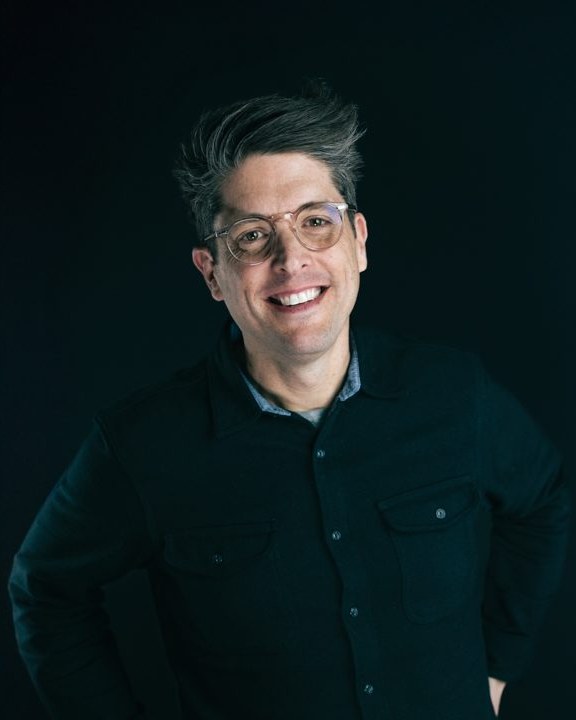
A podcast for ambitious nonprofit leaders who think AI can help their mission, hosted by Colleen Cook and Scott Williams, nonprofit fundraisers who figured out AI. See the whole season