Episode 0815:44Season 1
The Bathroom Sink
The half-built truth about AI for nonprofits
Most of what we build with AI is half done for a while, like the 13-inch discount sink we lived with in our unfinished office kitchen: functional, and not where you want to live.
What you’ll walk away with
- Why most of what you build with AI is half done for a while, like the 13-inch discount sink in an unfinished office kitchen
- Why Colleen and Scott’s job is to fail a whole bunch of times so you don’t have to
- The startup years, the maze of dead ends and the report Colleen finally just turned off
- The AI button inside the software your nonprofit already uses, and why the report numbers look the way they do
- The steam engine story: what nonprofits can learn from how factories finally got electricity right
Chapters
Transcript
Tap any line to hear it from there.
Scott
I remember buying a discount Home Depot sink combo, that was the sink that we were using. Like it was 13 inches wide or something like that, it was not big.
Colleen
Like a bathroom sink, that's kind of a good analogy to what this part of building is, I think is
Scott (AI voice)
This is If Possible, I'm Scott Williams, here with Colleen Cook. Today, the stuff we build that's only half done, why we live with it, and how you finally get out of
Scott
Episode eight.
Colleen
What did you just
Scott
Say? I said, yo, Colleen, episode eight.
Colleen
Episode eight? I thought you were like, what's so late? And I was like, that's a weird way
Scott
To start this. Episode eight, why so late? How's it
Colleen
Going this morning? It's good.
Scott
I'm excited to get into a chat here. I'm sure
Colleen
You can relate to this. I'm a moment of a little bit of sprawl as it relates to things that I have half built in Claude that all need fine tuning and it's exciting where it's heading, but I'm in that frustrating middle ground right now. It won't take long to get any of it there, but I'm in the middle of a bunch of other things and I can't give it that attention, so I'm not yet receiving the benefit of the thing I've built.
Scott
You got many things that you're excited about that you are working on with Claude, but it's not done yet and you haven't received the benefits. What is that term? I bet there's some German long word that nails it right in the middle. Think this is what happens. And the reason why is because what we are doing is we are figuring out all the ways to not build the thing in order to build the thing.
And so it's like, no, it's like you just said, I got this, but I don't want that. And so it's like dialing it into the right thing. And then finally you go, this is it. And then when you show it to somebody else, they're like, I want that. And then we're like, yeah, that's what we do.
Like that's literally our job. Our job is to fail a whole bunch of times in order for us to come up with a thing that does work. And then we can help people get that same thing without the windy road that it took for us to get there.
Colleen
We live for a while with a kitchen that wasn't fully installed, right? What was in our kitchen?
Scott
A fold up plastic table. That was the thing that held like the toaster and like those kind of things. And then we also had one of those water coolers, remember that we would get like jugs of water to come in. We had that. But then we also had, I remember buying a discount Home Depot sink combo. That was the sink that we were using.
Like it was 13 inches wide or something like that. It was not big.
Colleen
Like a bathroom sink though. That's kind of a good analogy to what this part of building is. I think is like it's functional.
Song: a bathroom sink in the kitchen
Scott (AI voice)
So where did that windy road come from? We made a lot
Colleen
Own. So you and I had spent years building a startup before this and were able to cover ground that took us years over the past three years in like days or hours. It became clear like it's not as simple as saying, oh, just go use this one piece of software. Like, no, go completely change the way you're thinking about your work. And this is how you need to approach it. We started finding pitfalls of like you would do something and we were able to move so fast that I'd be working on something, you'd be working on something and we'd put our brains together and be like, oh, we just got out of sync.
Like you just named a bunch of things and I named a bunch of things and now we're not synced up. And so this was actually the birth of an AI brain for us was like this need on the same page aligned with this source of truth. We didn't undo each other's work when we were doing our own. Or we would change an idea and be like, why does this change not showing up? Oh, it's because we baked it into all of our Claude skills or we baked it into these like custom projects or whatever.
Like we just, yeah, we broke it every way you needed to break it. I mean,
Scott
Us, we've been working with nonprofits for over 10 years. That's why we created If Possible. And so what we're doing is that we're consistently building all of these systems and employees and AI brains and mission brains and like all of this kind of stuff. And we're finding all the wrong ways to do it. It's a little bit like you have a maze in front of you and we've ran all the routes that are dead ends.
It's still work to do. And so then you install that, then it's like you're on third base and then just need to get to home and you're good.
Colleen
Having a clear path and a guided path in that is, I mean, I think it's something that's gonna make or break the nonprofits that are deploying it because they've got to be able to devote the time and energy to chase down a hundred wrong paths before they find that right one. Gosh, Scott, how many years have we been trying to get a single report for a full funnel?
Scott
And so Colleen, myself, several other people, we started a software company to be a CRM for nonprofits where we wanted to be fully customizable because we wanted to get data in a certain way, but that didn't work out. This is kind of one of the core things. It's like, we want to have one spot where everything can kind of flow to. And now we have the ultimate tool for that.
Colleen
Yes, and so I can see from the very, very top of my funnel, like reach and engagement on Meta of our ads all the way through to who's coming into sales meetings. And we learned in this funnel that we launched in July that it was doing great until it hit a form. So we spent the last month retooling the entire funnel, building a whole new flow to that funnel. And that ad report continued to tell me that it was a problem. So I finally just turned it off because I was like, I don't want to hear it anymore.
A word from our pretend sponsor
A
Colleen (AI voice)
New report on nonprofits and AI had just come out. Scott read it a little
A word from our pretend sponsor
Differently.
Scott
They are adopting AI. I mean, that's very clear. They're like, yeah, we use AI. And it's like, oh no, not like that. Only 4% have gotten it to work.
And so, yeah, they are adopting it and they're doing it fast, but they have no clear strategy on it. They have no clear strategy on the AI button in our existing software.
Colleen
That's right. Or the other thing this report highlights that I think is fascinating and also not surprising is shadow use of AI. I loved these questions. Everybody's got a job to do. It's the night before.
As a sector, nonprofit leaders are trying to figure this out, but the sub-headline to me in this is the distance between the staff and the leadership of those organizations. Meanwhile, the staff is a little bit more hesitated because a little bit less in control of that. And I think that gap is something we need to pay attention to because transformation within an organization is going to take everybody.
Scott
That's what it is. They're like, they see it. They kind of sense it. It's almost like there's a simmer before the pot starts to boil. They understand that this is like a valuable thing.
They don't know what they're doing. And then it's like, hey, you, 98% who have done it and only 4% who see the impact, how are you using it? They're like that button that's inside the app that we've had for 15 years. Is that what you mean by AI? It really is like a little bit like, hey, the TV just came out in the forties or whatever fifties.
And then it's, oh, there's TV. Oh, what is it? I don't understand. Like why? I have a radio. No big deal. And then all of a sudden it's like over the course of years, you see the TV explosion and then it's, oh, oh, this is a better form of entertainment.
It's just people need time to catch Up. When you're in Salesforce and you put data in there, Salesforce isn't going to talk back to you and say, thanks or here's my thoughts or whatever AI does. So it's almost a little bit like if I give information to this thing with Salesforce or anybody like that, it's just like, cool. I'm just holding it. I'm just hanging out with it.
I'm not doing anything with it, but it's like this one has action and agency potentially.
If Possible Theater
If Possible Theater presents First on the Block. Come on in everybody. The first television set on Maple Street, Harold, it's a radio with a window. Nah, nah, I'll wait until they get the bugs out. Earl, you waited on the telephone.
Still waiting. Dad, the goldfish is watching it too. We'd love to stay, but my radio program's on at eight and I've got butter to churn and I'm not missing the last steam locomotive. More room on the couch, Harold, I got one. The first television set on my side of the street, Earl.
It's 1962, we're in color.
Colleen
You would think if 32% have been trained, higher than 4% would say it was integrated. I think the gap between that is we're talking about a much bigger topic than learning a piece of software. Using AI is not like getting trained on one piece of software. It's about a total mindset shift on how technology works for you and how your work can flow. For me, for us, I think the mental shift is most akin to we used to be instrumentalists in an orchestra and now we're conductors of an orchestra, meaning that we're overseeing work being done in a way that used to be ours to do directly.
Scott
It seems to me as though within nonprofits, AI got to the marketing department like, hey, let's just use this for marketing and then it just kind of stalled out from there and then it didn't really move beyond that and the thing about AI is that wherever it touches, it produces a lift and it can touch anything within your org. It really is one of these things that when you start thinking differently about AI, you start to see the world differently, you start to function differently and it's not bad. It's all good. Turn
Colleen
Of the last century, what factories Were powered by? These are coal-fueled steam engines that were in the center of the factory floor and every single machine was hooked up to the steam engine. So when electricity came into factories, you know what they did? They put an electric engine in the same place where the steam engine had been and so the factory, all the machines were still hooked up to the electric engine and everybody was like kind of modest gains, like it really didn't change our lives because all it did was reduce our coal budget and some of that's offset by your electricity budget.
What really changed productivity three times the productivity in factories was when they figured out that we don't need to configure our factory around the steam engine or the electric engine anymore. We can put an electric engine on each machine that we do the work and then build the factory floor and the workflow and the process as to what's best for our factory because we are no longer tied to this central power. What that changed from a productivity standpoint, I think really mirrors where we are in this moment in time in the nonprofit sector from an AI adoption standpoint is I think over the last few years, the report tells us 98% started using AI and everybody's still chained to the
Scott (AI voice)
So how do you get from half built to done? Colleen had been noticing
Colleen
We've been using Claude as kind of our central command center for all things all year and mid-summer I was feeling like honestly just like depressed, a little bit depressed and I was trying to like just be curious about what was it and I think part of it was I just was reading in dark mode text just all day, just text, text, text, text, going between Claude and I'm reading in Notion and I've got everything on dark mode and I think it just got to the end of the day and I'm like, man, I just feel like I'm not getting any light in my body. And so we like changed some things up, broke in some breaks there and like changed things to light mode and all of that shifting into interacting with artifacts. I think everybody's going to do this, but I also think it's going to change what Claude's interface becomes too of like you built this ecosystem of productivity tools within that one control, what do you call it, control center. The fact that everybody can just build the solution to their problems. I'm
Scott
Starting big, the forest and then this patch of the forest and then this sub patch of the forest and then these 20 trees and then this one tree and then the leaf and then the ant on the leaf and that's what the command center is meant to be is the largest view. I can just look at it and go, okay, I'm good there, good there, ooh, I'm feeling uncomfortable about that. And then I dive into it and then I go in and I, oh, that's what I was uncomfortable. Okay, sweet. Let me do that. Oh, this task.
Yeah. And so I'll just do all that. And then I'm like, okay, I feel good. And then you move on. You realize, oh, nothing got dropped. Everything got pushed forward.
Everything is good. Wait, this system works. Yeah, No, it's, it's almost a little bit like this sounds really bizarre, but it's almost like if there's a person sitting in this chair right here, I'm like, ghost, like ghost on it. And I'm like, all right, let me do this with you.
And then I slowly, slowly back away and I start calling them and I'm like, we're still connected. Right. And then I just, okay, I'll see, I'll see you. And then I slowly just start fading into the background, but just keep checking on it every once in a while. And then eventually I just leave the room. And when I leave the room and I'm like, it worked.
Like that's a little bit about what AI is, is that you just keep training it and you're like, ooh, this keeps coming up. Oh, I can just, I can leave now. Like I can just leave the room.
Colleen
Yes, absolutely. I saw somebody on LinkedIn post about this this morning about like how you scaffold away AI agent. Like you start with just a ton of oversight and you review everything human in the loop is part of the process until the point it comes when you are no longer need to think about
Scott
It. It's the Homer thing. You know, he just slowly fades out. Like that's, that's what it is. When you're implementing AI, like in the realest way, this is what happens. You're like, oh wait, I don't have to do that anymore.
It's kind of awesome. Like, isn't it?
Transcript made by machine from the episode audio, so a few words may be off.
Want help putting this to work at your nonprofit? Talk to us
Start with these three
All 10 episodes

The show
If Possible
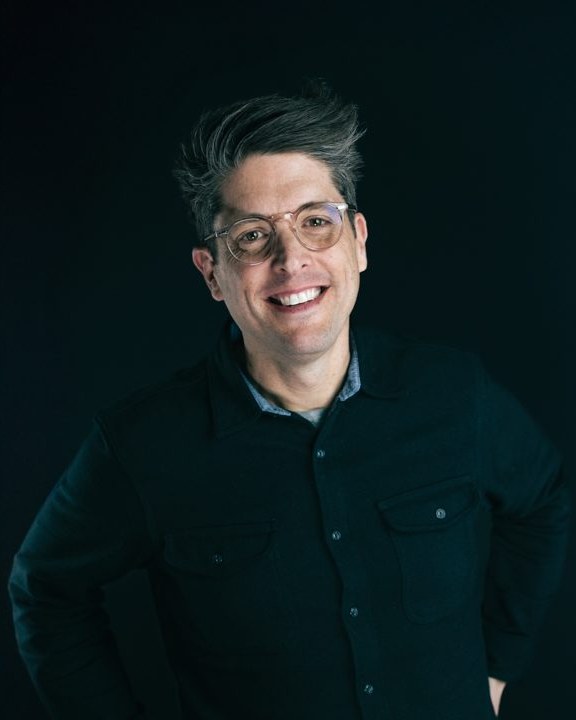
A podcast for ambitious nonprofit leaders who think AI can help their mission, hosted by Colleen Cook and Scott Williams, nonprofit fundraisers who figured out AI. See the whole season